

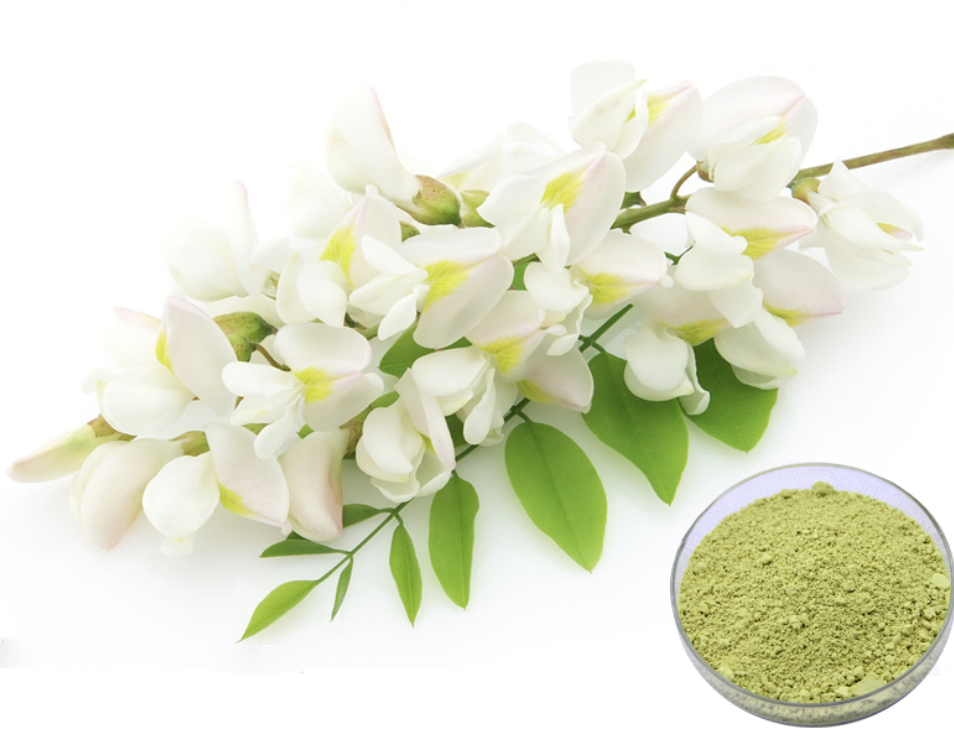
Product Name: SOPHORA JAPONICA EXTRACT(QUERCETIN)
HS Code: 1302199099
Packaging: 25kg Carton or Customized package;
Quercetin, also known as sophoretin, is a natural flavonoid compound extracted from the dried flower buds of the leguminous plant Sophora japonica L. (Chinese pagoda tree). The flower buds, known as "Huaimi" in Chinese, serve as the primary botanical raw material for quercetin. They are harvested in summer when the flower buds form, and then processed through drying, extraction, purification, and other procedures.
Primary Applications in the Food Sector
I. Natural Food Antioxidant
Quercetin is one of the most effective natural antioxidants, possessing strong free radical scavenging ability. In the food industry, quercetin can be used as a natural antioxidant in oils, fats, and fat-containing foods to delay lipid oxidation and rancidity. Studies have shown that adding quercetin and its derivatives (such as rutin) to oils and fats can significantly extend the product's shelf life.
II. Functional Food Ingredient
Quercetin can interact with starch molecules through hydrogen bonding, retarding starch retrogradation and improving thermal stability. This has practical value for developing retrogradation-resistant rice-based and wheat-based products, as it can improve product texture while enhancing its nutritional functionality.
Primary Applications in the Industrial Sector
I. Mycotoxin Detection in Grains
Quercetin can serve as a structural analog of aflatoxins and is used to prepare molecularly imprinted polymers (MIPs) for the separation, purification, and detection of trace aflatoxins in grains.
II. Active Ingredient in Health Products & Pharmaceuticals
Quercetin possesses various biological activities, including anti-inflammatory, antibacterial, antiviral, and antitumor effects. It is widely used in:Dietary supplements (tablets, capsules),Functional food ingredients,Cardiovascular health products.
III. Cosmetics & Personal Care Products
Quercetin's antioxidant, anti-inflammatory, and UV-absorbing properties give it application potential in the cosmetics field:
Anti-aging skincare: Utilizing its free radical scavenging ability
Sunscreen products: As a secondary UV-absorbing ingredient
Skin brightening products: Potentially acting through inhibition of tyrosinase activity.